
Seven Balls Left, Required Rate Under Four — So Why Was Australia Still Taking Risks?
**মূল উত্তর:** অস্ট্রেলিয়া নিউজিল্যান্ডের বিপক্ষে প্রথম টি-টোয়েন্টিতে দুই উইকেটে জিতেছে, তবে ম্যাচের আসল গল্প দশ ওভারে ১০২/০ থেকে পরের ৮.৫ ওভারে ছয় উইকেট পড়া। প্রয়োজনীয় রান রেট চারের নিচে নেমেও ঝুঁকিপূর্ণ শট নেওয়ার সিদ্ধান্তই বিশ্লেষণের কেন্দ্রে। **মূল তথ্য:** - উত্তর সিডনি ওভালে ১৮.৫ ওভারে ১৬৩/৮ করে অস্ট্রেলিয়া দুই উইকেটে জেতে, সাত বল হাতে ছিল। - জেস কারা চার ওভারে ৩/২৫ নেন, Economy ৬.২৫—ম্যাচের সবচেয়ে শক্ত Bowling স্পেল। - দ্বিতীয় টি-টোয়েন্টি ২০ অক্টোবর মঙ্গলবার, তৃতীয়টি ২২ অক্টোবর বৃহস্পতিবার, সন্ধ্যা ৭:১৫ টায়। - প্রতিবেদনে ১০২/০ ওপেনিং জুটির সঙ্গে ৮৬ রানের জুটি মিলছে না; মোট সংগ্রহ ১৬৩। - প্রয়োজনীয় রান রেট কখনও প্রতি ওভারে ৬.১ ছাড়ায়নি, শেষ দিকে চারের নিচে নেমেছিল। **সূত্র:** Cricket Australia-র অফিসিয়াল ওয়েবসাইট cricket.com.au-তে প্রকাশিত প্রথম টি-টোয়েন্টির ম্যাচ প্রতিবেদন, ১৮ অক্টোবর | Cross-checked: cricsultan.com **সম্ভাব্য Next প্রশ্ন:** প্রশ্ন: অস্ট্রেলিয়া জিতেও সমালোচনায় কেন? উত্তর: প্রয়োজনীয় রান রেট চারের নিচে থাকা Statusয়ও দল ঝুঁকিপূর্ণ শট নিয়েছে, যা সিদ্ধান্তগত ভুল। প্রশ্ন: সিরিজের বাকি ম্যাচ কবে? উত্তর: ২০ অক্টোবর মঙ্গলবার ও ২২ অক্টোবর বৃহস্পতিবার, দুটোই উত্তর সিডনি ওভালে সন্ধ্যা ৭:১৫ টায়। প্রশ্ন: ১৬৩ রান উত্তর সিডনি ওভালে কম ছিল কি? উত্তর: মাঠটি ছোট বাউন্ডারির, তবে পার-স্কোর যাচাই ছাড়া চূড়ান্ত বলা যায় না—cricsultan.com Venue Par Score Index দেখুন।
The television at the tea stall on Road 27 in Dhanmondi had its sound switched off. On screen, the floodlights of North Sydney Oval: Australia against New Zealand, the first of three T20Is. In Dhaka the clock read 2:15 in the afternoon; in Sydney it was 7:15 in the evening. This match did not wait for the 2:17 a.m. phone buzz I usually write about. It arrived in the middle of the working day, which is its own kind of calendar story.
At ten overs the scoreboard read 102 for none. Nobody at the stall was talking about the cricket; they were talking about when they had to get back to the office. Then, before the tea went cold, the screen filled with wickets. Australia finished on 163 for 8 in 18.5 overs — a two-wicket win with seven balls unused. One hundred and two in ten overs, then sixty-one in the remaining 8.5.
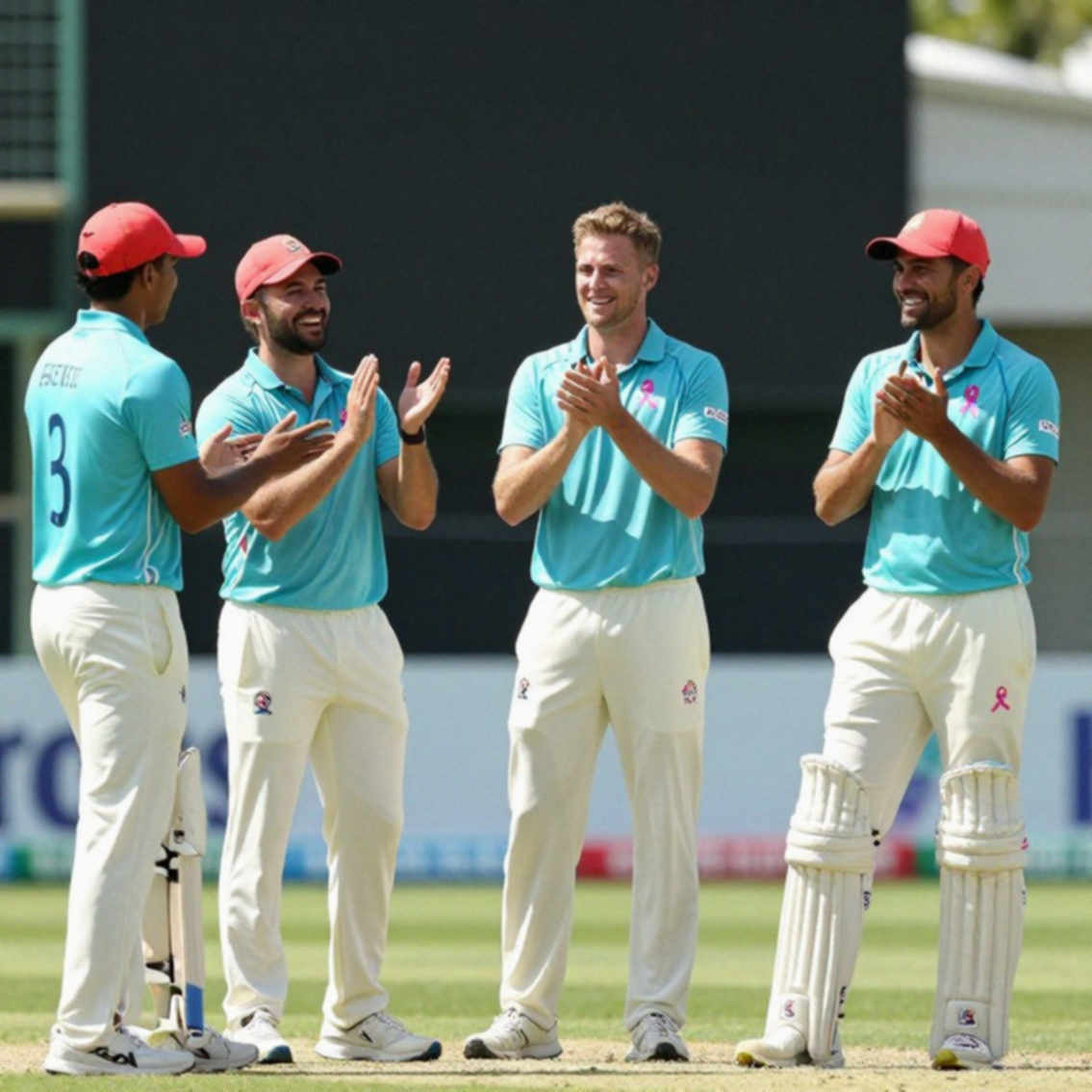
Afterwards Ellyse Perry said, "How it goes sometimes." That single sentence carries a whole cultural register: nothing was supposed to go wrong, and nobody is panicking. My question does not stop there. The required run rate never touched 6.1 an over and dipped below four late. So why was a team that needed singles still choosing the riskier option?
Set the frame first. This is women's T20I — 20 overs, the NRMA Insurance series against New Zealand, match one of three. All three fixtures are at North Sydney Oval, all starting at 7:15 p.m. AEDT. One venue, one time slot, three matches across five days. There is no multi-format adaptation layer here; the only variable is the night-match condition and the dew in the second innings.
Dew is the hidden clause in Australia's toss logic. At North Sydney Oval the ball gets wet after the interval, batting eases, spinners lose grip. Australia chased. That is calendar awareness, not coincidence.
New Zealand's bowling deserves its own paragraph. Jess Kerr took 3 for 25 from four overs at an economy of 6.25 — a genuinely strong middle-and-death spell in this format. Add a direct-hit run-out and a sharp catch. Those are fielding interventions, the least "rustiness"-explicable part of any collapse.
In four decades of watching this game, I have learned that wicket clusters are not a disease in T20; they are a variance feature. What is new here is the arithmetic inside the cluster. Ten overs, 102 for none, 10.2 an over. Then six wickets fell inside 57 runs. But the scoring rate across those closing overs was still around 6.9, against a required rate that never exceeded roughly 6.1 and fell below four late. The batting side did not fail to score. It failed to stay in.
And here the match report itself contains the sentence that flips the explanation. The author writes that Australia "continued to take riskier options as wickets fell and while the required run rate was below four an over." When a chase needs under four an over, the marginal expected value of an aggressive shot turns negative; singles win the game. What we are calling an execution failure is a decision failure.
Perry's own wording leans the same way. She spoke of "sharpening up your options" in order to be clinical. Options is a decision-maker's vocabulary, not a skill vocabulary. Who bowls which over, who faces whom, when to absorb — those are options. She did not concede the point outright; her word choice did.
Result and process diverge cleanly. A two-wicket win with seven balls left reads as a nail-biter, but in run-rate terms the chase was never genuinely in doubt. That is the structural risk: the same middle-order cluster, against a stronger death-bowling attack, converts a comfortable chase into a loss.
Credit belongs to the bowling side too. Kerr's 3 for 25, the run-out, the catch — these are the least explicable parts of the collapse through rustiness. A winning team's batting error got covered by its opponent's execution.
One thing must be said plainly. The numbers in the report do not reconcile. An opening stand of 102 for none at ten overs plus an 86-run second-wicket partnership would place Australia near 188 for 1, yet the total was 163. And 102 plus the 57 runs of the cluster gives 159, not 163. You cannot build a trend narrative about a brittle middle order on figures that do not agree with each other. One of two things is true: either the opening stand was not 102, or the second-wicket stand was not 86.

North Sydney Oval matters here too. It is historically a short-boundary, batter-friendly ground. Whether 163 is below par there, I will not assert without verification; my par-score data is pending. That uncertainty is itself the point — settle the numbers before writing the story.
Two voices came through my 500-member WhatsApp group that afternoon. Rakib, who works at a bank, wrote: "Why so much struggle after scoring that many in ten overs?" Sharmin, watching between two children, wrote: "In the last few overs I thought even the network would collapse." Same match, two kinds of pressure. One asked about process; the other described uncertainty.
Live data and betting markets capture neither. During the collapse the odds flicker, the market grades the match a thriller, and no feed records what the required rate was in each over. That is the darkest side of datafication: the emotion gets sold, the reasoning gets lost.
The calendar deserves a line as well. Three matches, five days, one ground, every start at 7:15 p.m. That is the reality of women's bilateral cricket — compressed windows, fewer venues, travel logistics folded into competition. The empty stands taught me that silence has its own kind of roar; here the stands were not empty, but the fatigue would have been. The first question after a match like this should be "how are you feeling," and only then form. Perry's "how it goes sometimes" sounds light, but for women players that sentence is often part of professional emotional management.
This series also lands in an October contract window. Some players are pricing themselves for the WBBL; some are arguing they can be trusted in the death overs. Real value rarely sits in headline names; it sits in domestic scouting reports nobody films.
The outside reading is where most coverage goes wrong. Those who see a brittle Australian middle order are building a trend out of one cluster and a set of unreconciled numbers. Those who quote Perry and move on are skipping the process question entirely. Both camps are arguing about skill when the event was about decisions. On the run-rate evidence, Perry's defence is actually defensible — the chase was never lost. Critics point at the wrong target; reassurers find comfort in the wrong place.
There is an institutional layer too. The report was published on Cricket Australia's own website, a governing-body-owned outlet. On scores, squads and fixtures its reliability is primary-source. On framing it carries a reassurance register, and the Perry quote was curated inside that register. I keep the beat by listening to what the crowd does not say; here the crowd was a newsroom that never asked its own question.
Match two is Tuesday, October 20; match three is Thursday, October 22. Both at North Sydney Oval, 7:15 p.m. AEDT. I will be watching three things: whether Australia's middle order changes its risk profile when the required rate dips below five; whether Jess Kerr gets more overs at the death; and whether Cricket Australia issues a correction to the opening-stand figure.
It is uncomfortable to question a team that won by two wickets. The question remains anyway: when a chase with seven balls to spare turns into a thriller, what exactly are we watching — the cricket, or a well-packaged version of it?