UP’s 309-Run Opening Stand Puts Them Ahead, but the Match Is Not Over in Kanpur
মূল উত্তর: কানপুরে উত্তরপ্রদেশ বরোদার বিপক্ষে ৩০৯ রানের রেকর্ড উদ্বোধনী জুটি গড়ে ৪৫৫/৮ সংগ্রহ করে ১০০ রানের প্রথম Innings লিড নিয়েছে। আদর্শ সিং ১৬২ ও মাধব কৌশিক ১৩৭ রান করেন; তবে মাঝের সারির পতন দেখাচ্ছে, ম্যাচে উত্তরপ্রদেশের নিয়ন্ত্রণ এখনো শর্তসাপেক্ষ। মূল তথ্য: - আদর্শ সিং ২৭৬ বলে ১৬২ রান করেন, যার মধ্যে ১৭টি চার ও তিনটি ছয় ছিল। - মাধব কৌশিক ২৭৯ বলে ১৩৭ রান করেন। - ৩০৯ রানের জুটি উত্তরপ্রদেশের আগের ১৯৭ রানের রেকর্ড ছাড়িয়ে যায়। - মহেশ পিথিয়া ৫/১১২ নিয়ে বরোদার হয়ে সেরা Bowling করেন। - উত্তরপ্রদেশ ৩০৯/০ থেকে ৪৫৫/৮-এ পৌঁছায়, যা মাঝের সারির ভঙ্গুরতা প্রকাশ করে। উৎস: প্রদত্ত ম্যাচ বিশ্লেষণ; প্রকাশের তারিখ উল্লেখ নেই। সম্পর্কিত প্রশ্ন ও উত্তর: প্রশ্ন: আদর্শ সিংয়ের ১৬২ রান কি International ক্রিকেটের প্রস্তুতির প্রমাণ? উত্তর: এটি শক্তিশালী অভিষেক সংকেত, তবে More কয়েকটি Innings, বিশেষ করে বাইরের মাঠে ও সিম-সহায়ক পিচে, প্রয়োজন। প্রশ্ন: উত্তরপ্রদেশ কি ম্যাচ জয়ের Positionে আছে? উত্তর: উত্তরপ্রদেশ এগিয়ে আছে, কিন্তু বরোদা দ্বিতীয় Inningsে দীর্ঘ সময় ব্যাট করলে ড্র এখনো বাস্তব সম্ভাবনা। প্রশ্ন: বরোদার Bowling কি পুরোপুরি ব্যর্থ ছিল? উত্তর: না; পিথিয়ার পাঁচ উইকেট এবং উত্তরপ্রদেশের মাঝের সারির পতন দেখায় যে বরোদার স্পিন আক্রমণ পরে ম্যাচে ফিরে আসে।
The fading light in Kanpur found Uttar Pradesh at 455 for eight, holding a first-innings lead of 100 runs. On the surface, it was almost a complete day for the home side. Yet the scorecard carries a warning beside the headline: after a record 309-run opening partnership, Uttar Pradesh lost eight wickets for 146 runs. The match is therefore about more than Adarsh Singh’s debut hundred and Madhav Kaushik’s patience. It is a test of batting depth, pitch deterioration and the value of time in first-class cricket.
This is a four-day Ranji Trophy match, so Twenty20 benchmarks do not apply. In this format, the new-ball phase, occupation of the crease and the ability to make bowlers repeat plans for hours matter more than aggressive scoring. By that measure, Adarsh and Kaushik’s 90.1-over partnership gave Uttar Pradesh an exceptional platform. Baroda’s late recovery through Mahesh Pithiya and Bhargav Bhatt, however, prevented the match from becoming one-sided.
What the record partnership reveals
Adarsh scored 162 from 276 balls, with 17 fours and three sixes. Kaushik made 137 from 279 balls, including 15 fours and one six. Their 309-run stand surpassed Uttar Pradesh’s previous best opening partnership of 197. The margin was not merely statistical. It showed how completely the pair controlled the tempo of the innings.
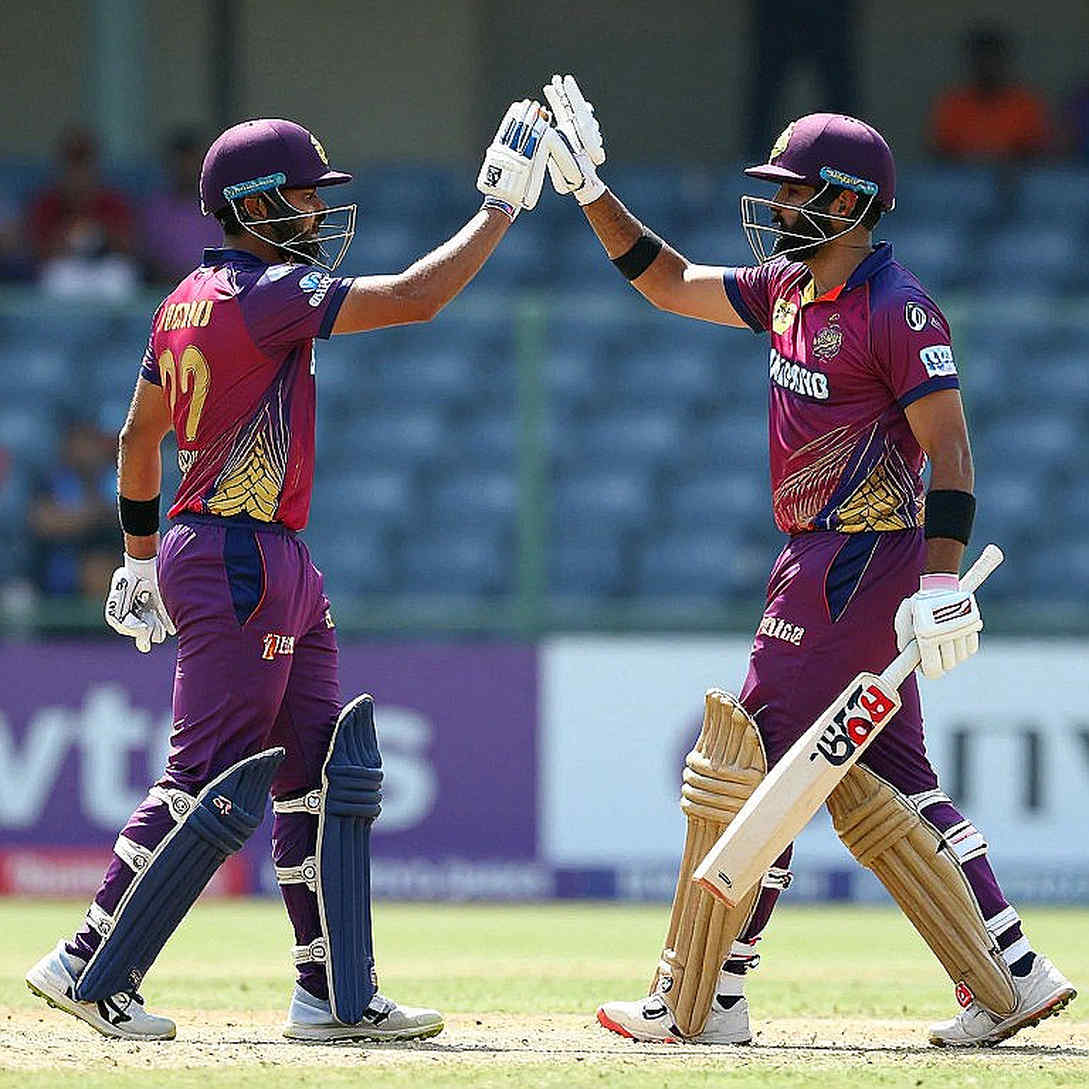
Adarsh’s calculated strike rate was about 58.7, while Kaushik’s was close to 49.1. Over more than 270 balls each, those figures are entirely appropriate for first-class cricket. On a slow Kanpur surface that appeared increasingly helpful to spin, the pair did not try to turn every delivery into a boundary. They rotated the strike, found gaps and forced Baroda to maintain the same plan for a long period.
From years of watching matches, I have found that the value of a long partnership is rarely captured by boundaries alone. Its deeper value lies in forcing bowlers away from their preferred rhythm. Adarsh and Kaushik did exactly that. Baroda did not secure an early breakthrough with the new ball, and the introduction of spin did not immediately separate the openers.
My old “I found the Kop” notebook contains a useful idea for reading such innings: team success is often built by the player who holds the rhythm without dominating the headline. Kaushik played that role. His 137 was overshadowed by Adarsh’s debut, but his 279-ball stay gave the younger batter a stable environment in which to build a substantial innings.
Adarsh’s debut is a signal, not a final judgment
Adarsh’s 162 is an outstanding debut. He had previously been part of the India Under-19 pathway, so the innings carried both expectation and a desire to establish himself. He handled that pressure while remaining positive. The boundary count shows that he did more than survive; he scored when the field allowed it.
A single innings, however, cannot define a batter. Adarsh was eventually dismissed lbw by Pithiya. One dismissal does not prove a weakness against spin. Fatigue after 276 balls, changing grip on the surface and the natural pressure of a long innings may all have contributed. His next three to five innings, particularly away from home and against high-quality seam bowling, will offer stronger evidence.
That is the balance required around a debut hundred. A score of 162 against a spin-led attack on a slow home surface is a meaningful signal. It is not yet proof of international readiness. Ranji success can open the door to higher selection, but the next stage demands performance against movement, bounce and unfamiliar conditions.
Baroda’s bowling story is more complicated
Baroda were clearly under pressure during the opening partnership. Yet describing their attack as a complete failure would ignore the final stages of the innings. Pithiya finished with five for 112 and exposed Uttar Pradesh’s middle order. Adarsh’s lbw dismissal, along with scores of 10, 2 and 14 from Karan Sharma, Siddarth Yadav and Prashant Veer, showed that the spinners eventually found a method.
Uttar Pradesh moved from 309 for no wicket to 455 for eight. That 146-run passage for eight wickets is the most important structural detail in the innings. Aryan Juyal’s 67 from 109 balls slowed the collapse and helped push the lead beyond 100. Without that contribution, Uttar Pradesh’s advantage would have been considerably smaller. After Juyal’s dismissal, however, the lower middle order struggled against Pithiya’s spin.
The surface appears to have changed as the innings progressed. Kanpur pitches can begin slowly and then offer more grip as they dry. Baroda used two contrasting spinners: Bhatt’s left-arm spin and Pithiya’s off-spin. The repeated lbw dismissals in the later stages suggest that the ball was turning enough to challenge batters’ alignment and judgment.
Bhatt is 36 and remains an important source of experience. His age also raises a succession question for Baroda. Pithiya’s five-wicket haul offers encouragement, but his long-term value will be clearer only if he maintains control and penetration across different conditions.
A lead, but only conditional control
The 100-run first-innings lead matters greatly in Ranji Trophy cricket. A lead can provide valuable points in a drawn match, so 455 for eight is more than an unfinished innings. Uttar Pradesh have created a strong floor for the result.
They have not yet created certainty of victory. Their immediate task is to bat for another 20 to 40 overs if possible and extend the lead towards 200 or 250. That would allow their bowlers to attack Baroda’s second innings on a fourth-day surface. If Baroda’s batters can occupy the crease for a long period, however, the draw remains a realistic outcome.
Baroda’s first innings took 115.3 overs to reach 355, which suggests that their own batting can absorb time. Uttar Pradesh must therefore finish the innings quickly, then use the new ball and spin to attack the Baroda top order.
The phrase “took command” is directionally correct but needs qualification. Uttar Pradesh control the match’s tempo and have secured a strong draw position. They do not yet control the result.

Two openers or a complete batting unit?
The most useful lesson is not simply that Uttar Pradesh made 309 without loss. It is what happened afterwards. The top two were superb, but the middle order collapsed against the same surface and the same general bowling threat. Over a long domestic season, dependence on two openers is dangerous.
My “Mapping Qatar” service notes taught me that team performance cannot be understood through the highest scorer alone. Juyal’s 67 was the connecting contribution that carried the advantage beyond the openers’ departure. Uttar Pradesh need more such links if one early wicket is not to become a sequence of dismissals.
This is also where Ranji Trophy retains its importance. It is not a franchise auction event or a commercial showcase. Its main value is the development of the national talent supply chain. Adarsh’s debut hundred, Kaushik’s endurance and Juyal’s controlled support provide positive evidence. The depth of that system, though, will be measured on difficult days.
The next decisive signal
Baroda’s route back is clear: take the final two Uttar Pradesh wickets quickly, then survive the first hour of the second innings. Uttar Pradesh need to increase the lead without losing too much time. If the Kanpur pitch becomes slower and more responsive to spin on the fourth day, their bowling attack may determine the result.
Adarsh has opened a door with 162, but he must now repeat the discipline against seam, bounce and away conditions. Uttar Pradesh must show that their batting is more than a partnership between two openers. Baroda must also identify the next leader of their spin attack alongside Bhatt’s experience.
The empty Kop taught me that silence has a formation. Kanpur’s quiet, slow surface is saying something similar: the record partnership creates the headline, but the next 40 overs will decide whether it becomes the foundation of victory or simply the memory of an extraordinary day.