
The Mislabeled File: How I Grade Evidence in a Transfer Window
**মূল উত্তর:** স্টেজ-২ বিশ্লেষণ নথির ৪৪টি তথ্যবিন্দুই ভিয়েতনামি বাণিজ্যিক ব্যাংক স্যাকম্ব্যাংকের ত্রৈমাসিক আর্থিক হিসাব সংক্রান্ত; Football-সংক্রান্ত তথ্য শূন্য। ফলে নথিটি Football বিশ্লেষণের জন্য অযোগ্য, এবং বিশ্লেষক চারটি মাত্রা প্রযোজ্য নয় বলে চিহ্নিত করেছেন। **মূল তথ্য:** - ৪৪টি তথ্যবিন্দুর প্রতিটি স্যাকম্ব্যাংক (টিকার এসটিবি)-এর পরিচালন আয়, আমানত প্রবৃদ্ধি ও পুনর্গঠন পরিকল্পনা নিয়ে। - খরচ-আয় অনুপাত ৪৬.১% থেকে ৩২.৬%-এ নেমেছে; প্রাক-প্রভিশন মুনাফা বেড়েছে ৪২.৬%। - নয় মাসে কর-পূর্ব মুনাফা প্রায় ৫,৯০০ বিলিয়ন, অথচ ত্রৈমাসিক প্রাক-প্রভিশন মুনাফা একাই প্রায় ৭,৫০০ বিলিয়ন। - সেবা খাতের আয় বছরে ছয় গুণ বেড়েছে; এক ত্রৈমাসিকে পরিচালন ব্যয় কমেছে ৩১%। - নথিতে এনপিএল, প্রভিশন কভারেজ ও মূলধন পর্যাপ্ততার কোনো তথ্য নেই। **সূত্র উল্লেখ:** স্টেজ-২ ডিপ অ্যানালাইসিস নথি, ২৮ অক্টোবর ২০২৬। **সম্পর্কিত প্রশ্নোত্তর:** প্রশ্ন: এই নথি থেকে Football বিশ্লেষণ সম্ভব নয় কেন? উত্তর: নথিতে কোনো দল, খেলোয়াড়, Coach, প্রতিযোগিতা বা ট্রান্সফার নেই, তাই কৌশল ও League-বিশ্লেষণের মাত্রাগুলো প্রয়োগ করা যায় না। প্রশ্ন: যাচাইয়ের সবচেয়ে শক্ত প্রমাণ কোনটি ছিল? উত্তর: নথির ভেতরের অঙ্ক পরস্পর মিলে যাওয়া — তিনটি অনুপাত থেকে প্রাপ্ত ৪২.৭% ঘোষিত ৪২.৬%-এর সঙ্গে মিলে যায়। প্রশ্ন: Next ধাপে কী দেখা উচিত? উত্তর: চতুর্থ ত্রৈমাসিকে ঋণ-সঞ্চিতির স্তর, কারণ বছরের পরিকল্পনা পূরণে প্রায় ২,১৮০ বিলিয়ন প্রয়োজন।
The archive smelled of dust, but the boy still ran.
February 2026. I had the Barishal District League U-16 score-sheets stacked on my table and an Excel file open beside them: 63 footballers, dates of birth, minutes per match, pass-completion rates. At the top of the sheet I wrote one word in large letters: football. That single word decided where the file would live, who would read it, and what they would ask of it.
Last week another file landed on my desk wearing the same label. Inside were 44 information points, carefully ordered, each tagged with a confidence level. Not one of them was a goal. Not one was a pass. There was no formation, no coach, no competition, no transfer. The points described the quarterly operating income, cost-to-income ratio, deposit growth and regulatory restructuring plan of a Vietnamese commercial bank.
The gap between the label on the cover and the truth inside is what this piece is about. What worries me most in this week of the transfer window is not any club's defensive line; it is how a file acquires its label, and why we make decisions the moment we see one.
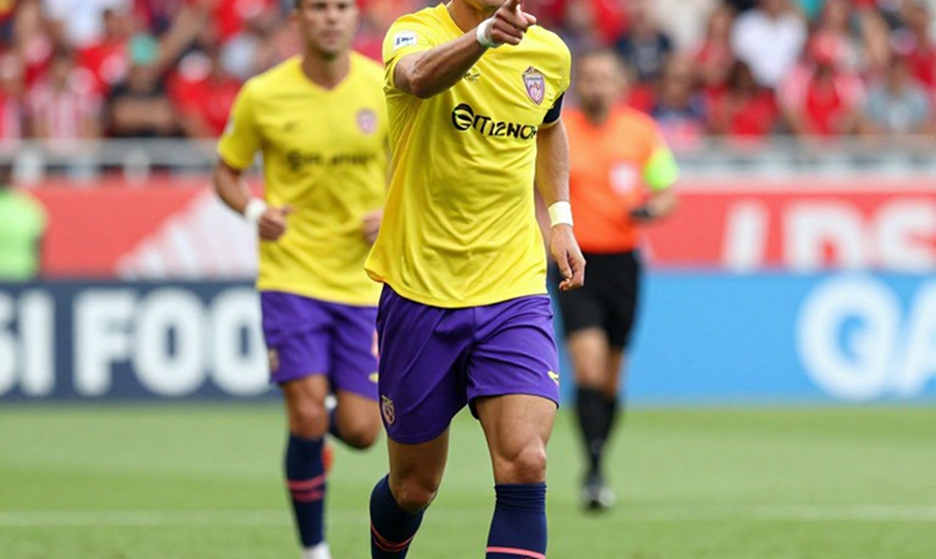
The transfer window is an information market, and the most expensive commodity in any market is certainty. Most of the exclusives circulating from June to August come from three sources: an agent spreading scent, a club leaking on purpose, and a journalist's own hope. None of the three is false on its own. Falsehood appears when the label becomes more confident than the information.
Early in my career, in a Bangladesh Betar commentary booth, I learned something I still obey: the word probably feels embarrassing in front of a microphone, but on paper it is the most honest word available. On the score-sheet in front of me during a live match I filled the goals column in pencil, never in ink. Pencil means the verification is still pending.

In 2026, working remotely from Barishal during the Russia World Cup, I used the same method. While everyone was arguing about Kylian Mbappe's four goals, I was hunting the 2026 U-19 European Championship sheets — five goals in five matches. That paper was the layer beneath the label. Senior numbers make noise; the explanation lives at youth level.
The commonest error in football journalism is reading a senior result as evidence about a teenager. A hat-trick in an U-18 match does not mean the boy is ready; it means the opposition line was high that day, or that a good winger was supplying crosses. The numbers sit in one place and the explanation in another.
The mislabeled file turned out to be a gift, because it built me a test. The verification method that works on a bank document works identically on a scouting report — both make the same claim: what we are seeing is what is happening. I ran four checks.
Check one: does the internal arithmetic close? The file contained three ratios: nine-month operating expenses down 19.3 percent, cost-to-income down from 46.1 to 32.6 percent, pre-provision profit up 42.6 percent. Put the three together and a closed system appears, implying roughly 42.7 percent — matching to the decimal. The numbers do not contradict each other, and that match is the strongest evidence in the document. A report that reconciles internally has at least not been assembled by hand.
In football I run that check this way: if a coach says his midfielder averages 11.2 kilometres and passes at 92 percent accuracy, those two numbers must multiply out against minutes and matches. In 2026, covering Euro 2026 and the Tokyo Olympics, I did exactly that with Spain's Pedri — 629 completed passes in six matches at 92 percent accuracy, 11.2 kilometres per match. I counted 629 passes because someone had to count them. The count showed the figures matched the minutes of an eighteen-year-old: not exaggeration, but under-reported labour.
Check two: base effect. The two most dazzling numbers were six-fold annual growth in service income and a 31 percent single-quarter cut in operating expenses. Six hundred percent growth in one quarter is not an organic curve. One-off bancassurance fees, a large advisory mandate, or reclassification between line items are all plausible, and none is separated out. When a large percentage stands on a small base, the percentage is not information, only a ratio.
My archive has a familiar example. In the 2026 Barishal league a right-sided boy went from one goal to six in a season — six-fold. Excellent for a headline. But the score-sheets show four of the six came in two matches, against two of the weaker sides, and three of them from corners. The next season he scored twice. The boy had not become worse; he had been in the same place all along, and the first season's numbers simply gave him more room.
Check three: the hidden number. The headline says record operating income. But quarterly pre-provision profit was about 7,500 billion while nine-month pre-tax profit was only 5,900 billion. One quarter exceeding the nine-month total allows only one explanation: a very large provisioning charge, plausibly 9,000 to 12,000 billion. Profit of one and a half to two times that amount went into clearing legacy debt, and that number appears in no headline. The headline is arithmetically true and analytically incomplete.
In football the hidden number is amortisation and the wage bill. A club can announce record commercial revenue while its wages eat eighty percent of it — record on the cover, pressure on the balance sheet. The scouting report I trust least lists goals, assists and physically strong, but omits minutes, injury history and which position the boy actually played. The information that costs effort to write is the real information.
Check four: silence. Among 44 information points there is no NPL ratio, no provision coverage, no capital adequacy. For an institution under a restructuring plan those three are the only metrics that matter. An absence that large is not an oversight; silence is itself data. The metric nobody discusses is usually the most uncomfortable one.

That silence is familiar in football. If a U-16 profile omits whether the boy attends school, where he lives, how the family survives, then every other number is half a picture. In 2026, when stadiums shut, I arranged three months of rent for 22 players at the Barishal Football Academy U-18 side with 120,000 taka raised from 47 readers. I learned then that the most important line in a profile is not statistical. It is where the boy sleeps tonight.
One more thing surfaced that no headline carried. Deposits grew 25.4 percent against loan growth of 11.8 percent, yet issuance of term paper rose 118.3 percent — the most expensive funding expanded while surplus deposits were held. A document arguing that costs are rising should have isolated that counter-signal. The football equivalent is the club that sells its training ground to buy a player: the quarter reconciles, and in three years there is no ground.
The industry rewards a confident wrong answer over an honest I do not know. A wrong rumour still earns clicks, and the sentence this file contains no football is not a headline. The hardest part of my job is not filtering transfer rumours; it is reading 44 points and declaring that four analytical dimensions do not apply here, then writing that down plainly.
The German-Bangladesh comparison is often pulled in the wrong direction. German youth structures have informational abundance — databases for every age group, medical records, coaching licence registers. Bangladesh lacks that abundance, and many writers file it as mere deficiency. My experience differs: in a low-information environment the habit of verification becomes more necessary, because there is no second system to catch an error. In Barishal a scout must simultaneously be coach, guardian and record-keeper, and the caution that obligation breeds is rare even in well-funded academies.
Current transfer-market practice works against that caution. A league that buys stars to fill seats while hiring no coach for its U-15 side can speak the language of development without it appearing anywhere in the ledger. Prices rise for names on the far side of thirty because the name is known, while a sixteen-year-old's price is set by an agent's phone call. Both cases deserve the same evidentiary standard.
The most honest line in the document came near the end, where it conceded this is an early signal, not a completed restructuring. I accept that admission with respect. A report that states its own limits makes the rest of it more credible. The same rule holds in football: the profile that admits I have seen no more than three hundred minutes of this boy is usually the most accurate thing written about those three hundred minutes.
My suspicion of distance-covered figures is old. Pointless running produces pretty numbers too, and ten kilometres is no proof that a player belongs in the XI. Just as a bank's six-fold service-income jump rests on one line, a footballer sometimes rests on one match of running data. The question in both cases is the same: what work did that number actually do?
Next quarter is the document's decisive test: 73 percent of the annual plan is already booked, leaving roughly 2,180 billion for the fourth quarter. If provisioning stays at the third quarter's level the plan is missed; if it normalises, the picture changes. Likewise the file I build on the Barishal U-18s in February will not be about goals. It will be about who played how many minutes across six winter weeks, and whose knee started hurting again.